
The Venice We See: Monet and the Value of Artistic Vision
There are certain cities that seem to exist partly in reality and partly in imagination. Venice is one of them.
Even before visiting, most of us already carry some version of Venice in our minds: quiet canals, ornate palaces, gondolas cutting through reflective water, and buildings that appear to rise directly from the lagoon. Monet and Venice at the de Young made me think about how much of that imagined city has been shaped by artists; and how differently the same place can exist when seen through another person’s eyes.
The exhibition brings together more than twenty of Claude Monet’s Venetian paintings, placing them alongside depictions of the city by artists including Canaletto, Sargent, and Renoir. It also includes works from other periods of Monet’s career, allowing visitors to see how Venice connected with his longstanding fascination with water, reflection, light, and atmosphere.
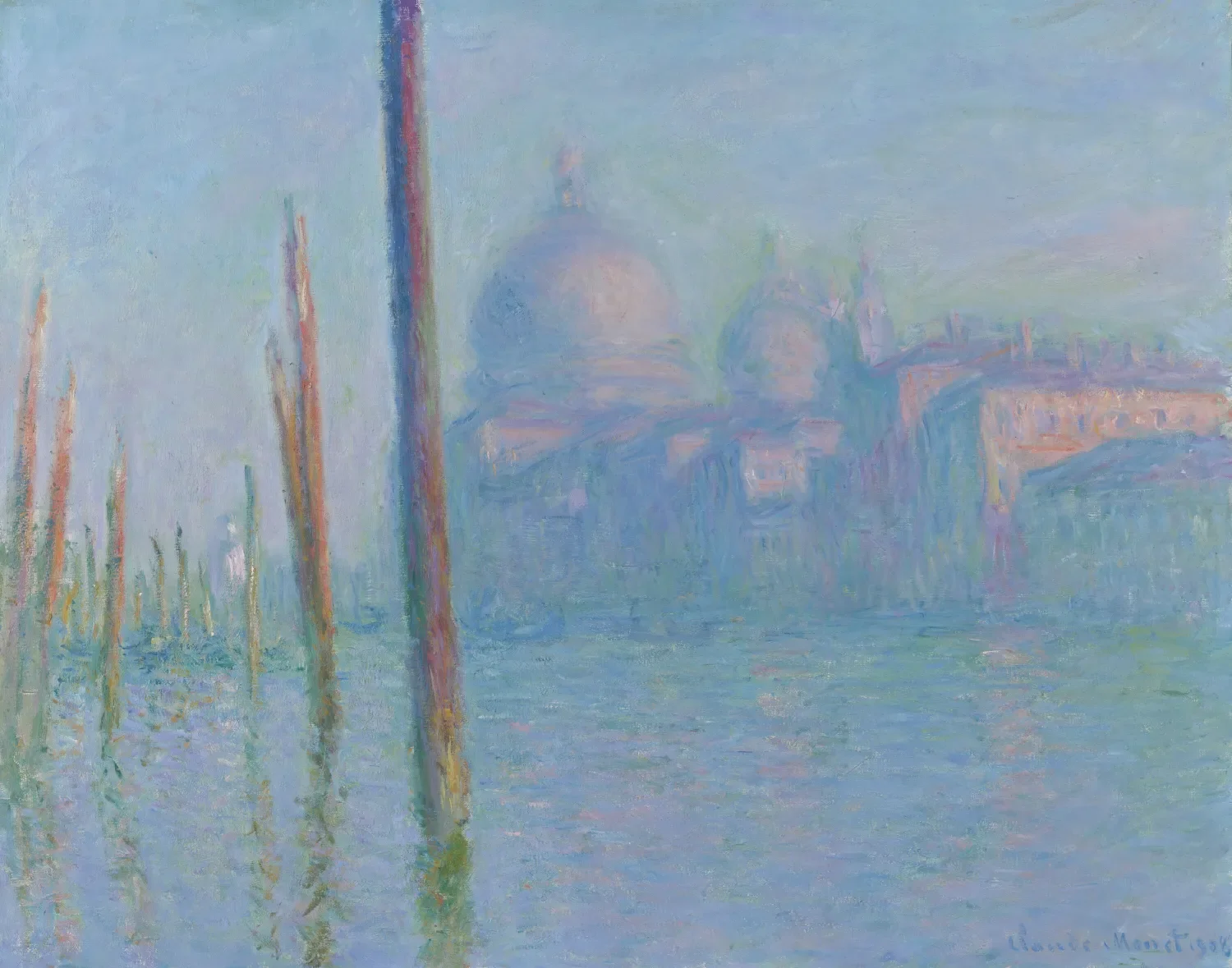
Claude Monet, The Grand Canal, Venice, 1908. Oil on canvas, 28 7/8 x 36 3/8 in. (73.343 x 92.393 cm)
Fine Arts Museums of San Francisco, Gift of Osgood Hooker, 1960.29. Photograph by Randy Dodson
What I loved most was not simply seeing Venice through Monet’s eyes but seeing it through so many different artistic perspectives.
The architecture remained recognizable from one work to the next, but the emotional experience of the city changed completely depending on who was looking at it. In one painting, Venice could feel structured and grand. In another, it became hazy, intimate, or almost dreamlike. The same buildings, canals, and stretches of water became entirely different places through changes in color, composition, brushwork, and attention.
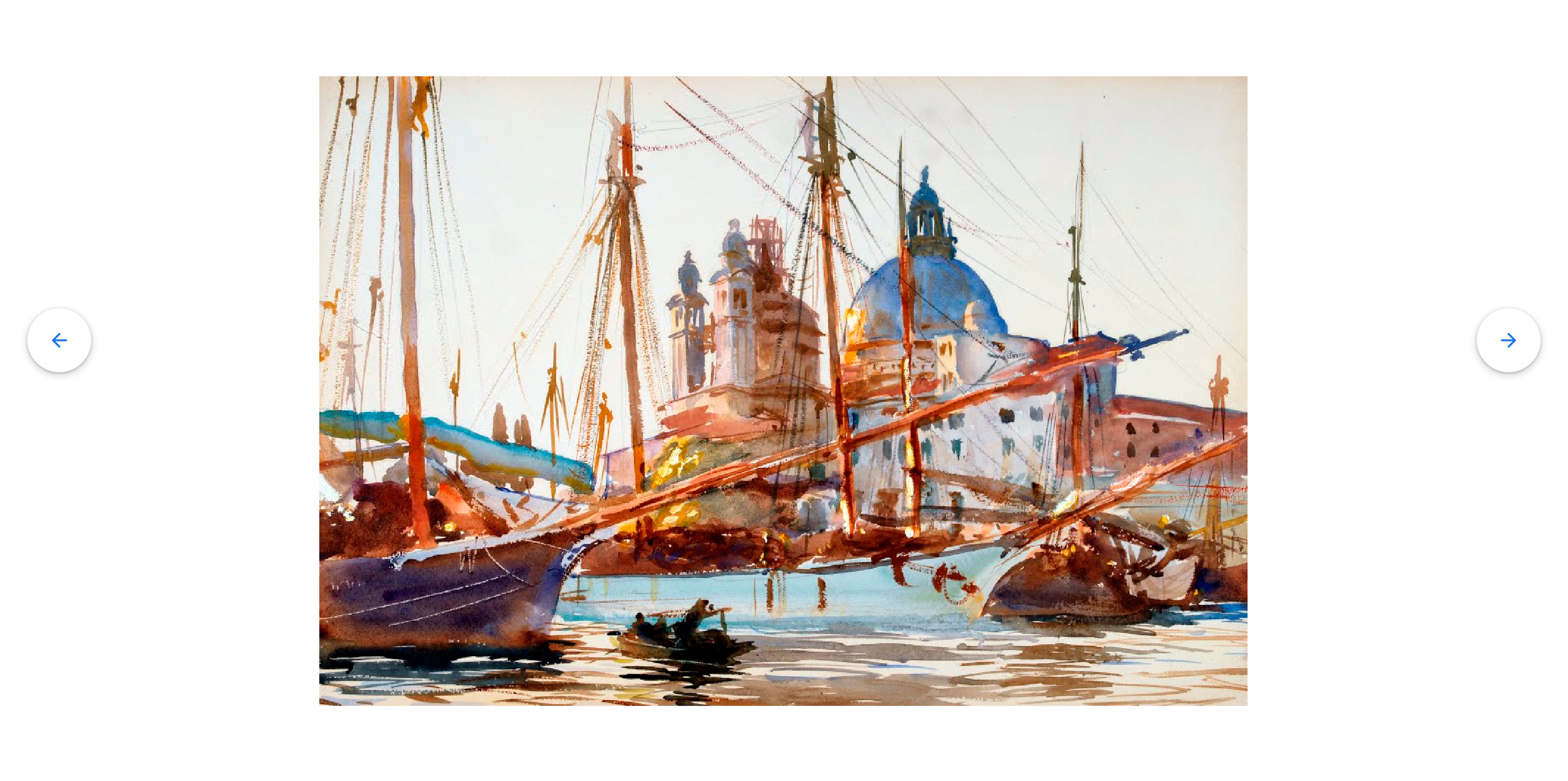
Santa Maria Della Salute Church, Venice
John Singer Sargent1904-09
Monet’s Venice feels less like a fixed city than a fleeting impression of one. Buildings soften into the surrounding air. Reflections become almost as substantial as the architecture creating them. The distinction between water, sky, and stone begins to disappear.
Unlike artists who emphasized the movement and activity of Venetian life, Monet’s paintings are often nearly empty of people. His attention rests instead on the way architecture emerges through light and color, as though the city might dissolve into the atmosphere at any moment.
Monet visited Venice only once, spending approximately ten weeks there in 1908. Yet that relatively brief encounter produced a body of work distinctive enough to inspire an exhibition more than a century later. His paintings are not valuable because he recorded Venice with perfect objectivity. They are valuable precisely because he did not. He translated the city through his own sensitivity to light, water, color, and time.
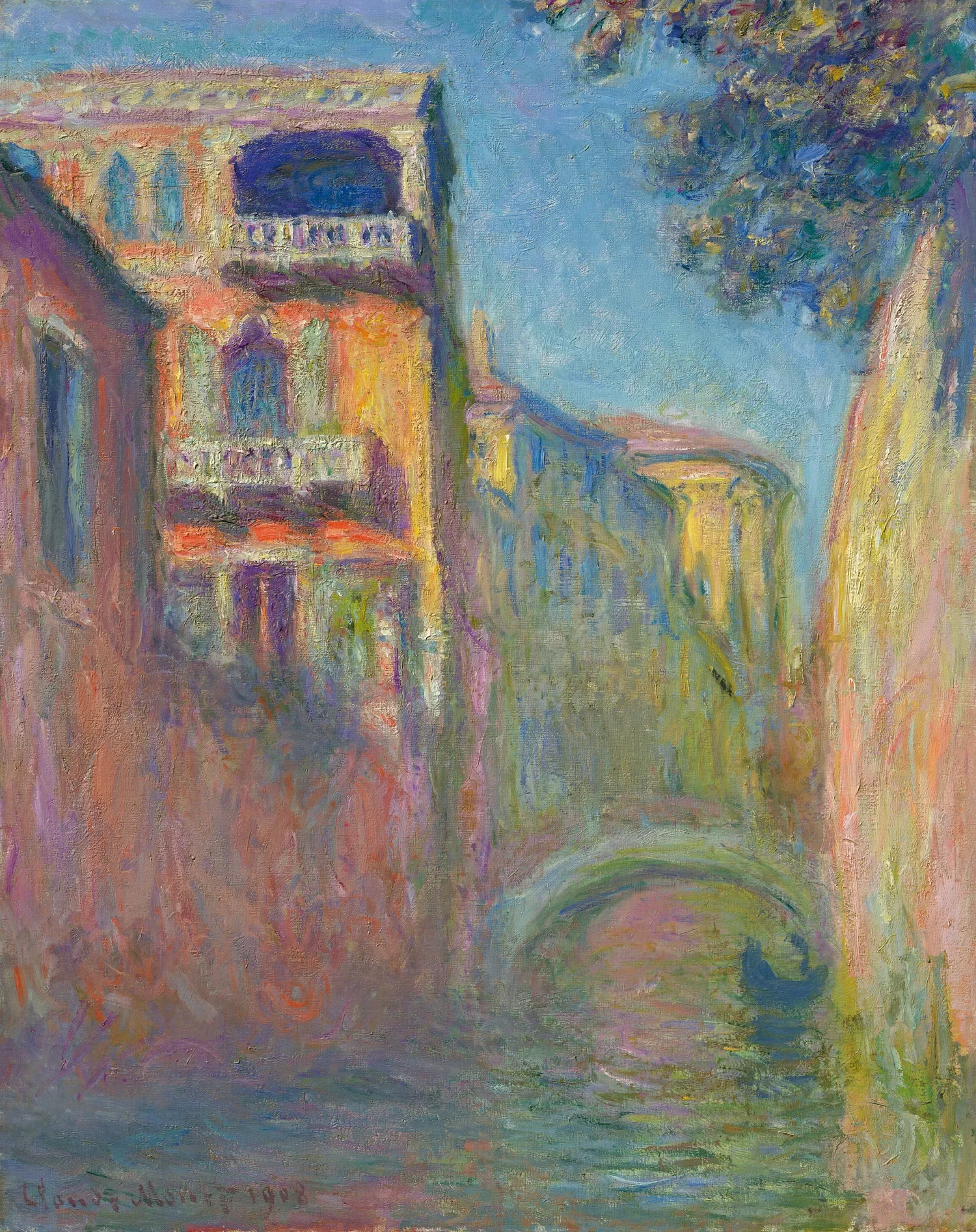
Claude Monet,
The Rio della Salute, 1908. Oil on canvas, 31 7/8 x 25 9/16 in. (81 x 65 cm).
Hasso Plattner Collection / Sammlung Hasso Plattner. Image courtesy of Hasso Plattner Collection / Sammlung Hasso Plattner
That idea stayed with me as I walked through the exhibition.
Living in San Francisco and the Bay Area means living in a place where technology is always present. Innovation surrounds us, and increasingly sophisticated tools can reproduce images, gather references, imitate styles, and generate something visually impressive within seconds. There is possibility in those tools. But the exhibition offered a quiet reminder that the ability to produce an image is not the same as having a vision.
A view is what stands in front of us. Vision is what we notice within it.
Two people can stand in exactly the same place and create something entirely different. One may be captivated by the architecture, another by the movement of the water, and another by the loneliness of a nearly empty canal. Artistic vision is formed through memory, emotion, curiosity, experience, and all the subtle preferences that determine where someone chooses to look.
Technology can assist an artist, but it cannot replace the significance of that choice.
This felt especially clear while moving between different representations of Venice. None of the artists had created the single definitive version of the city. Instead, each had contributed another way of understanding it. Their differences were not imperfections to be corrected. They were the reason the exhibition was so compelling.
It reminded me that art does not have to provide the most technically accurate record of a place. Sometimes its purpose is to preserve what it felt like to encounter that place through one consciousness.
I left the de Young thinking less about Venice as a destination and more about seeing itself. The exhibition was lovely, but it was also affirming. It emphasized that artists are not merely responsible for making beautiful objects. They show us what might otherwise go unnoticed. They offer evidence that familiar subjects can still contain countless interpretations.
In an era filled with increasingly powerful ways to create and reproduce imagery, an individual point of view may be more important than ever.
The world does not need only more images. It needs people who can look closely enough to show us something within it that we have not seen before.
Monet and Venice is on view at the de Young through July 26, 2026.
