
How I Begin: The Process Behind a Collection
A look at how the Hibernation collection came to life, before a single mark was made.
Every collection I make begins in the same place: with a question, a feeling, or a story I haven’t figured out how to tell yet. The making comes later. First, there’s a gathering of ideas, symbols, atmosphere. A world gets built before anything gets drawn.
Here’s how that process looked for the Hibernation collection.
1. Start With the Story
Before color, before composition, before anything visual, there’s a story.
For this collection, that story came from thinking about winter rest. Hibernation. The particular quality of a pause that isn’t empty but preparatory. A stillness that exists because something new is quietly taking shape underneath it.
That became the emotional spine of the whole collection. Every piece would need to live inside that feeling: the quiet before, the warmth beneath, the protection that’s already present even when you can’t see it.
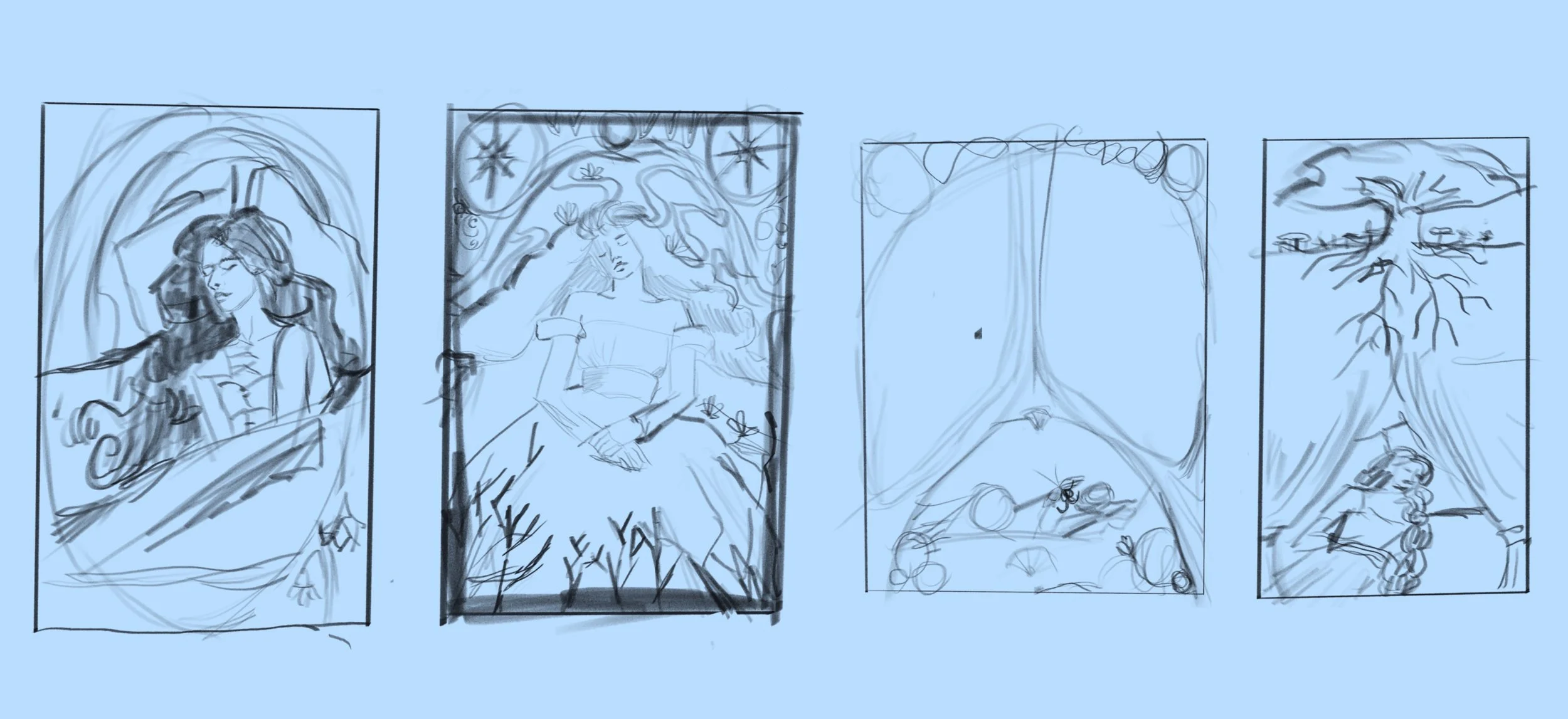
Early sketches
2. Choose a Limited Color Palette
Color is the first decision that makes everything feel like a collection rather than a series of separate pieces.
For Hibernation I wanted tones that felt still, introspective, muted, atmospheric, and a little nocturnal. Deep indigo. Cold silver. The faint amber glow of something alive beneath frost. The palette had to feel like the emotional temperature of the story itself: cool on the surface, quietly warm underneath.
Choosing this early means every piece is already in conversation with the others, even before the symbols or compositions are decided.
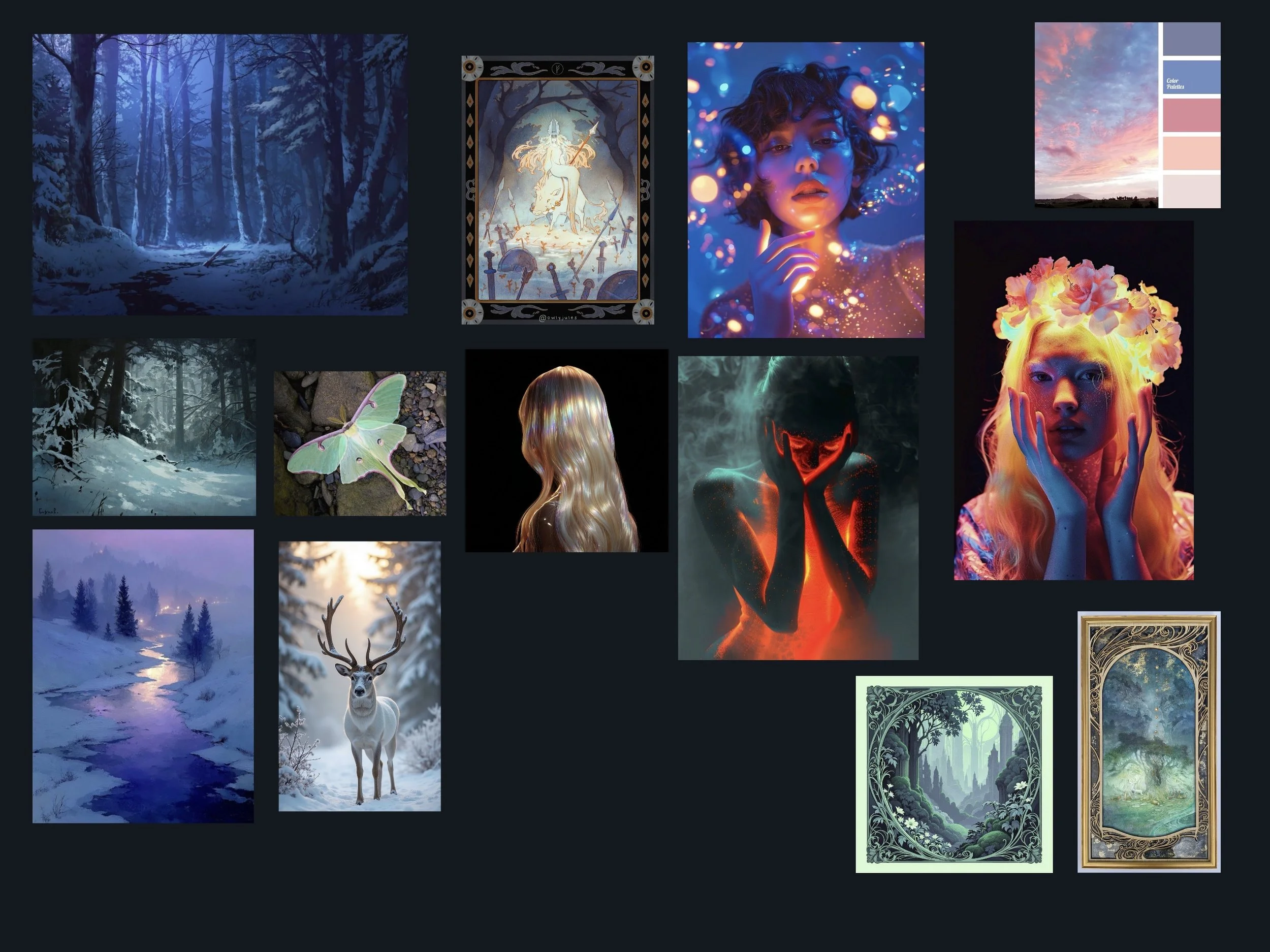
Mood Board
Comprised of images sourced from Pinterest.
3. Define the Symbols
Recurring symbols are what turn individual pieces into a world.
In this collection, those anchors are the stag, the moon, bare winter branches, and the Art Nouveau decorative framing. Each one carries meaning: guardianship, cycles, dormancy, structure; and each one reappears across the three pieces in different forms. Sometimes present, sometimes only suggested. Sometimes dissolved into pattern entirely.
That slow reveal is intentional. The symbols let the story unfold piece by piece rather than all at once.
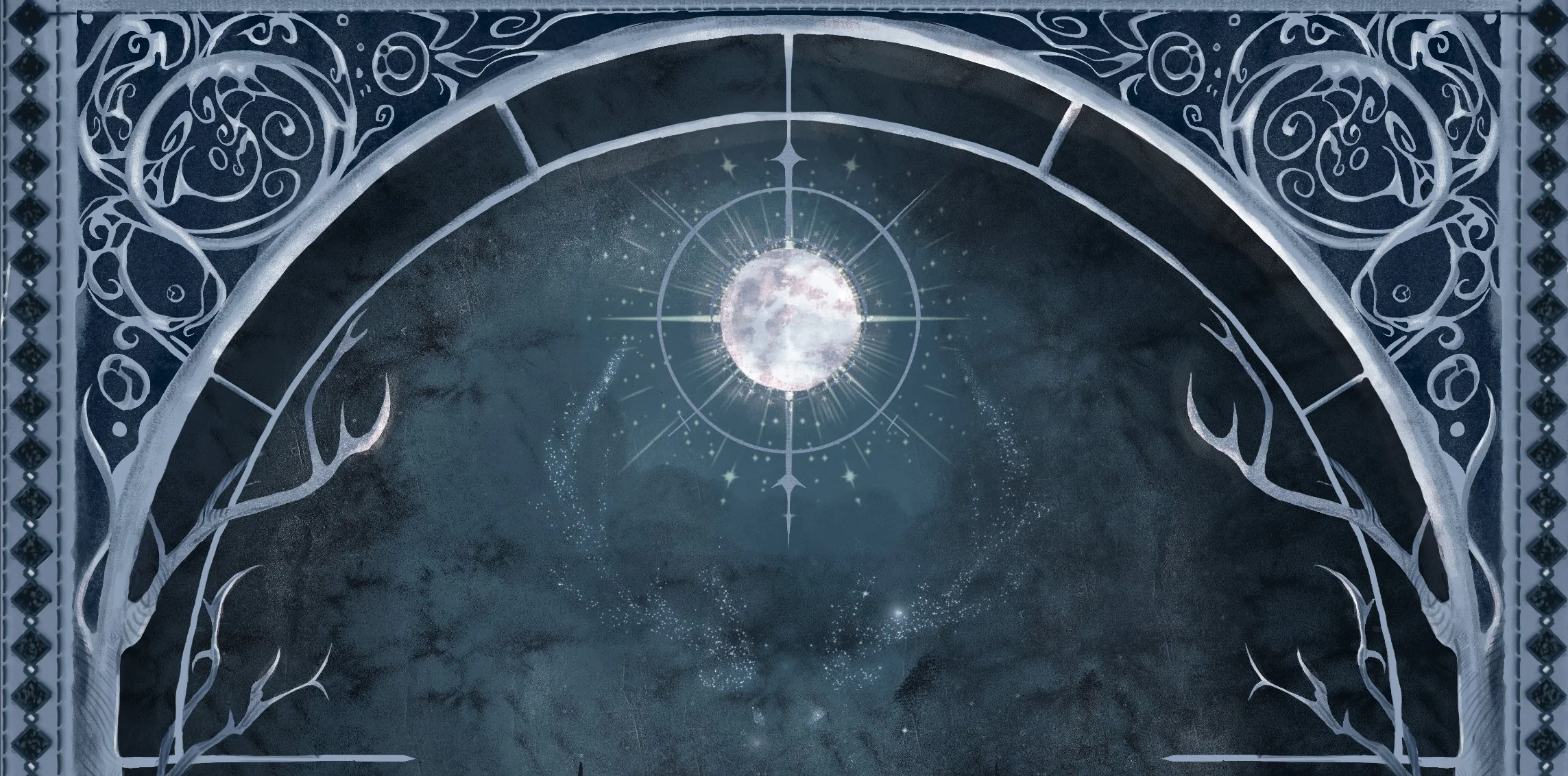
‘Under a Watching Sky’, Detail
Sophia Mathes, 2026
4. Set a Clear Number of Works
This collection is intentionally limited to three pieces.
That constraint isn’t a limitation, it’s a creative decision. Knowing the shape of the collection from the start means each piece has a role to play. An anchor. A middle. An ending. Each work stands alone, but together they tell something none of them could tell individually.
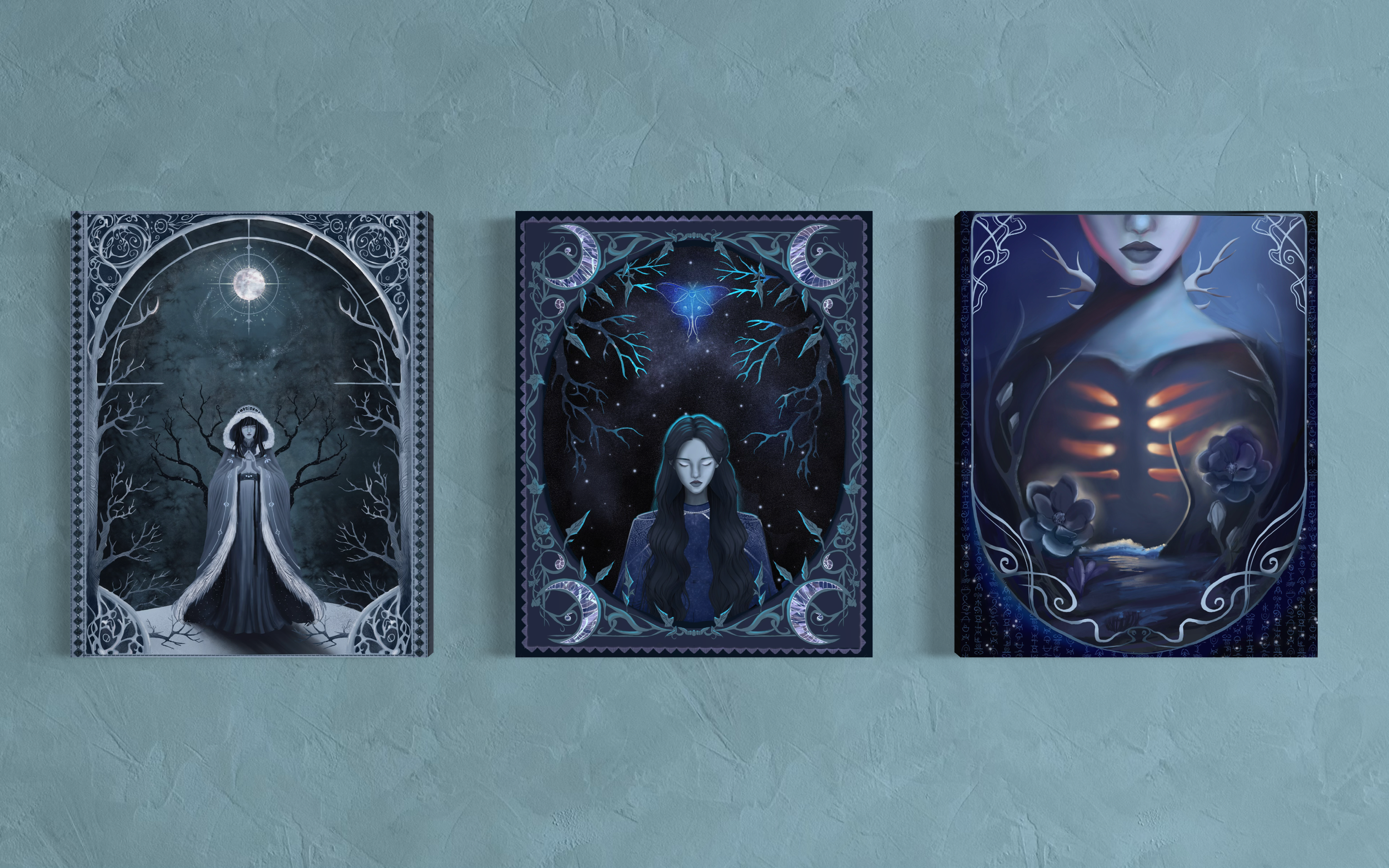
From left to right: ‘Under a Watching Sky’ ‘Held Through the Long Night’ and ‘Still Warm Beneath’
Sophia Mathes, 2026
