
Manet and Morisot: Modern Life, Shared Histories, and the Art of Making Together
Seeing the Manet and Morisot exhibition at San Francisco’s Legion of Honor feels less like encountering a traditional pairing and more like stepping into an ongoing conversation. One shaped by proximity, influence, resistance, and care. I’ve visited the exhibition twice now, and each viewing has revealed something different, which feels entirely appropriate for work so rooted in looking, returning, and reconsidering.
Both artists were painting at a moment when modern life was still forming itself. Paris was changing rapidly, socially and physically, while political unrest and war shaped daily existence. The Franco-Prussian War and the upheaval of the Paris Commune were not distant historical events but lived realities. Even when war does not appear explicitly in their work, its presence is felt: in the tension of bodies, in the fragility of domestic interiors, and in the sense that stability is always temporary.
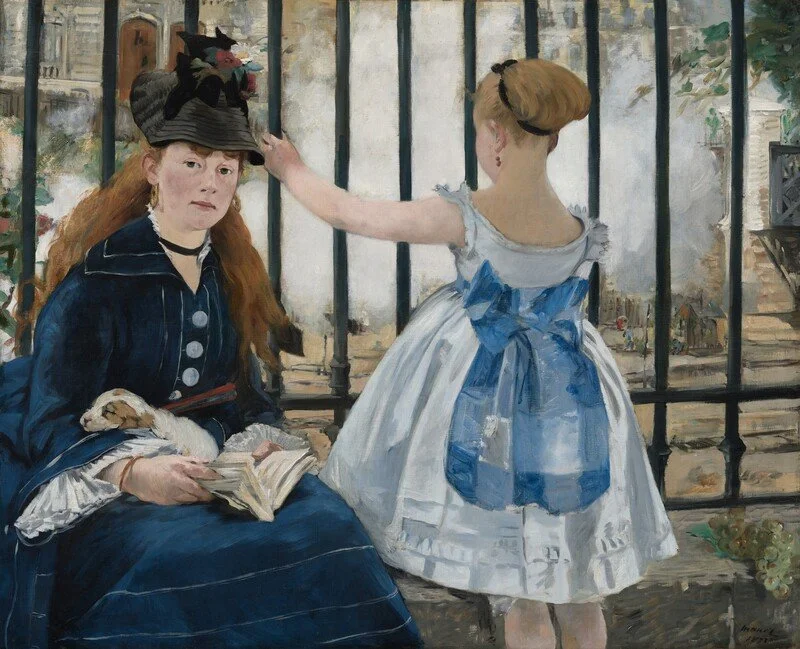
The Railway
1873
Edouard Manet
Manet is often framed as the instigator of modern painting: confrontational, flattening the picture plane, collapsing historical distance, insisting that painting acknowledge its own constructedness. His figures frequently meet the viewer head-on, carrying a quiet defiance that feels inseparable from a world in flux. Scenes of leisure are never fully relaxed; there is always pressure from outside the frame: class, politics, violence, or social performance.
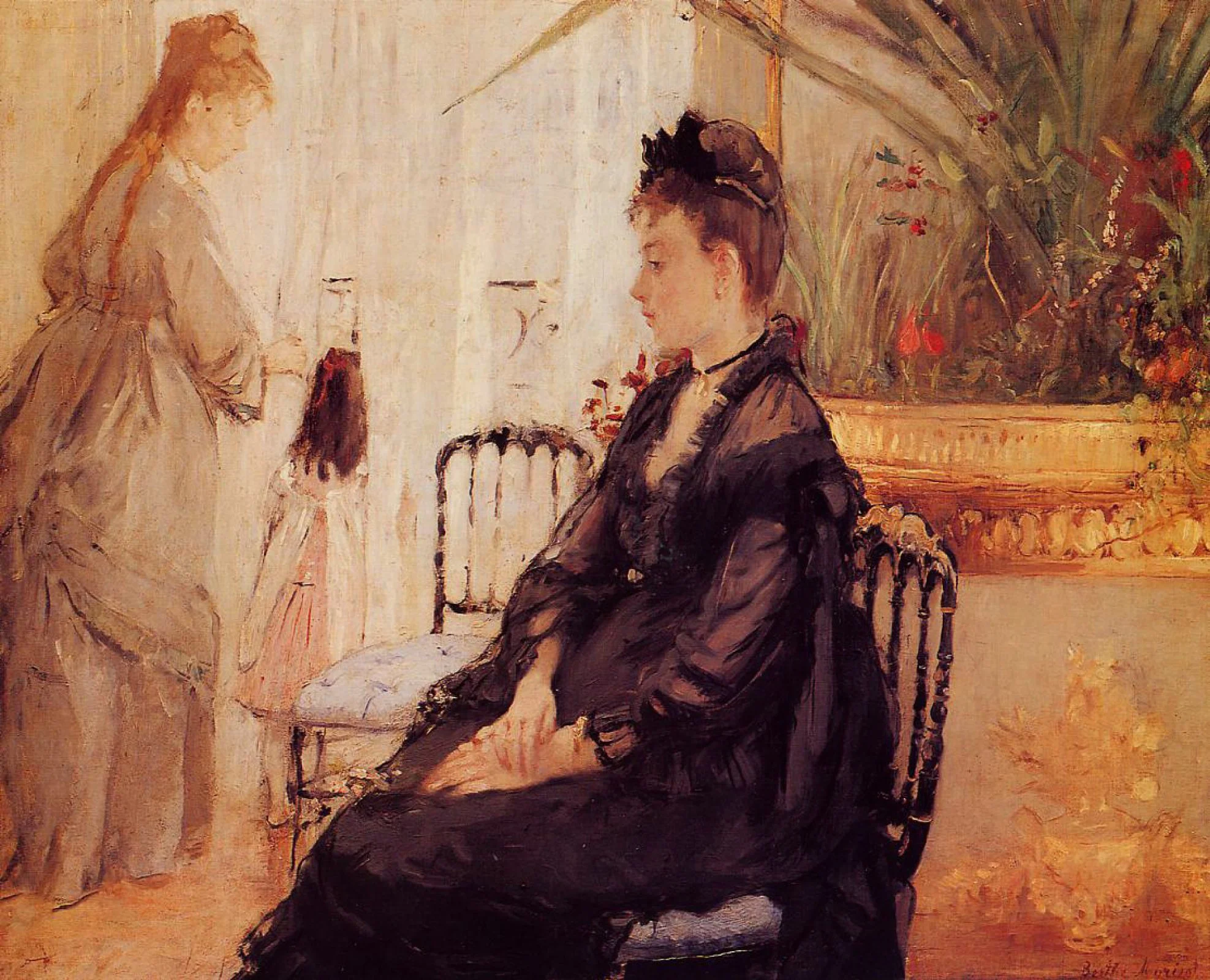
Interior
Berthe Morisot, 1872
Morisot, too often described in softer terms, emerges here as a painter equally committed to modernity. Her work turns inward toward family life, private rooms, and moments of pause, but these spaces are not insulated from history. They feel provisional, aware of their own vulnerability. Domestic life, in Morisot’s hands, becomes a site of modern experience rather than an escape from it.
What becomes especially clear in this exhibition is how much it is about relationships. We tend to speak about artists in the singular, reinforcing the myth of the isolated genius. But standing in these galleries, that idea feels insufficient. No man is an island. The best creation often comes from sustained exchange.
Manet and Morisot shared meals, studios, conversations, and years of looking: at each other’s work and at the same world from different positions within it. Morisot posed for Manet. Manet painted Morisot. But Morisot was also watching, responding, and transforming what she absorbed into something distinctly her own. The influence between them is not one-directional; it is reciprocal, human, and ongoing.
Morisot’s paintings are porous. Forms seem to breathe into one another, light passing through fabric, skin, and air. Yet this openness is carefully controlled. Her figures, often women within family structures, are neither passive nor fully free. They exist within networks of care, obligation, and attention. Their interior lives are present, even when withheld.
The Legion of Honor’s setting encourages slow looking. This is an exhibition that rewards return visits and close attention to small shifts: the angle of a wrist, a figure turning away, the charged stillness of a room holding more than it reveals. I would strongly recommend picking up the audio tour if you can. It adds historical context and a personal touch without overpowering the experience, and it deepened my appreciation on my second visit.
What lingers after leaving is not a hierarchy of importance, but a shared urgency. Both artists were grappling with what it meant to live, and make art, during a period of instability and transformation. Where Manet confronts, Morisot inhabits. Where Manet exposes, Morisot observes from within. Together, they offer a fuller picture of modernity, one shaped not only by rupture and conflict, but by connection.
For contemporary artists, this exhibition feels quietly instructive. It reminds us that meaningful work does not emerge from isolation alone, but from relationships; with other artists, with family, and with the historical moment we move through together.
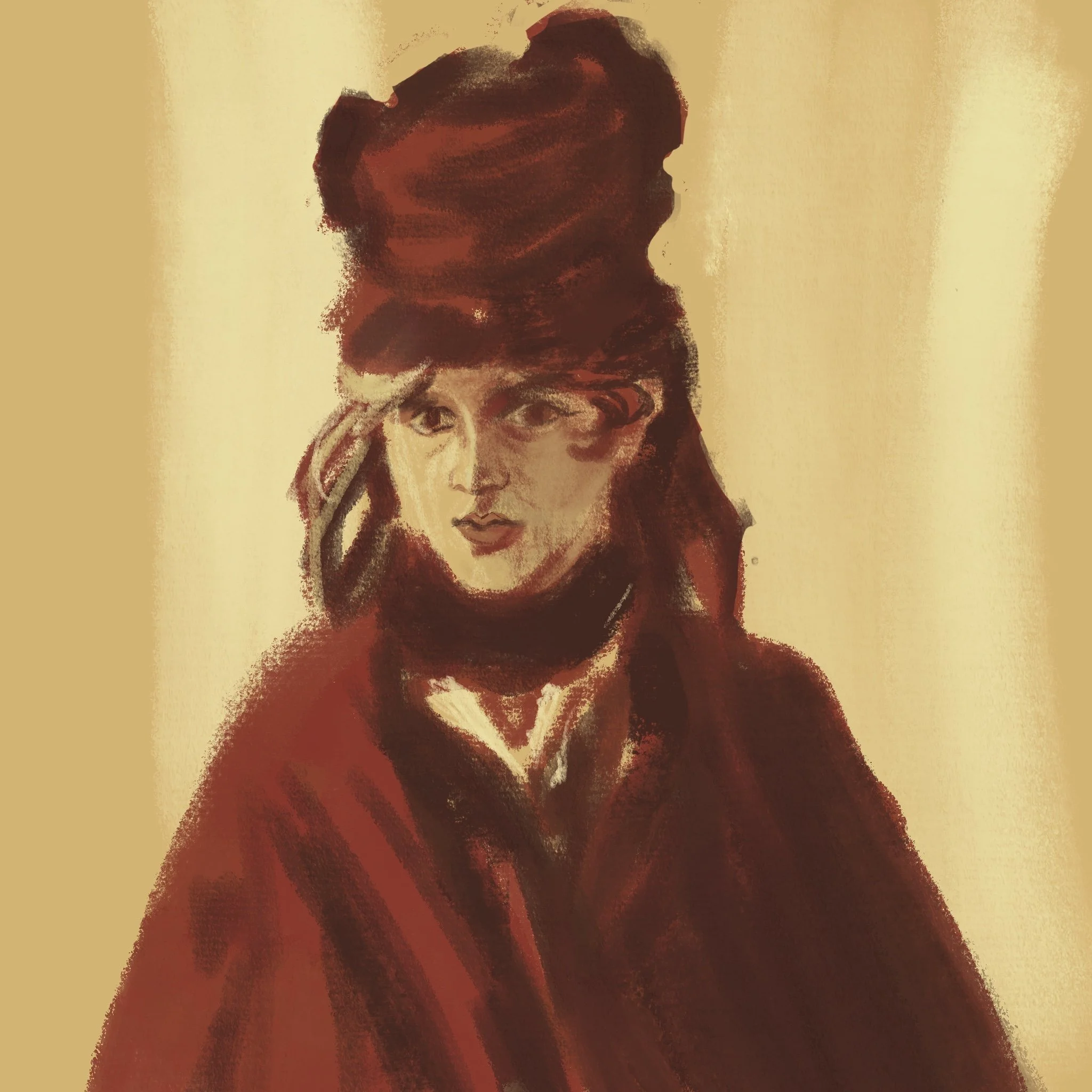
Study of Berthe Morisot with a Bouquet of Violets by Edouard Manet
Sophia Mathes, 2026
