Margins of Time: Walking With the Work
Walking With the Work
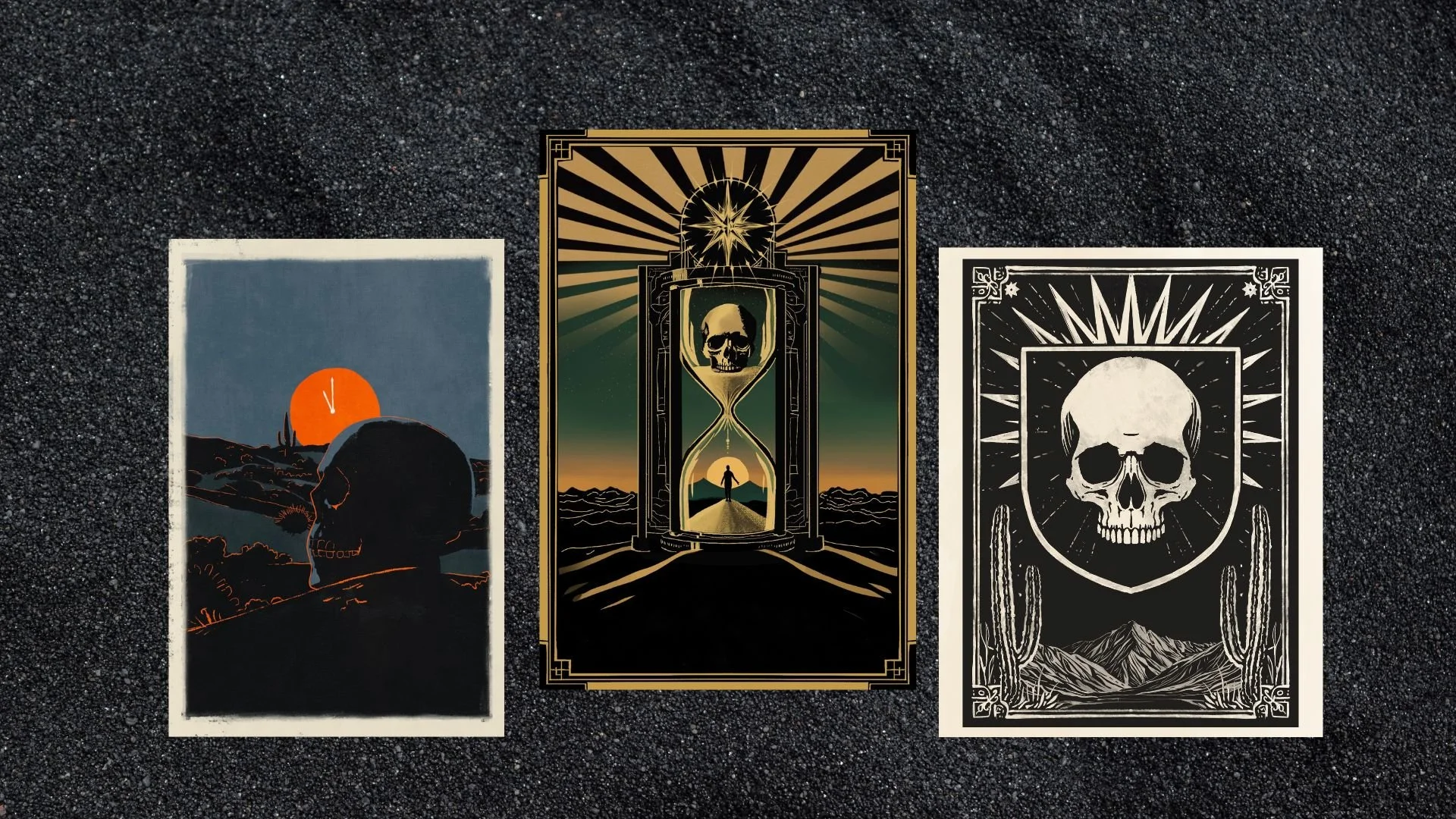
These three pieces evolved alongside one another, slowly and unevenly. Their development came in spurts. Days would pass with little to no progress, followed by moments of sudden clarity sparked by something seen or felt. When that happened, I had to pause, recenter myself, and push forward with intention.
At the time of their creation, I had not yet read Of Time and Punishment, but I had read J.D. Mathes’ essay On the Origins of Time: A Meditation. The ideas and narratives explored in that essay quietly shaped this body of work, influencing its tone and thematic direction long before the final forms emerged.
One such moment of clarity occurred while walking through the Financial District in San Francisco. I had stopped at a crosswalk, preoccupied as usual with the work in progress, when I became acutely aware of the way shadows were cut sharply across the street below. My gaze travelled upward along the façade of a nearby building, following the geometry and rhythm of the architecture. In that instant, I understood how to move forward with the piece now known as Ante Against Eternity.
I think of as walking with it. Some ideas need to be carried for a while before they reveal what they require. Progress, for me, often comes not from forcing resolution, but from allowing space for observation, reflection, and recognition.
Ante Against Eternity: architecture, chance, and the illusion of control
Resonance Rather Than Illustration
Parts of that essay later appear, woven throughout Of Time and Punishment, and in hindsight, it feels inevitable that the visual language of these pieces emerged where it did. The elements that shaped my approach: isolation, chance, inevitability, mirror many of the themes and emotional undercurrents present in the book itself.
Though developed independently, the illustrations came to function as a visual counterpart to the narrative, reflecting its atmosphere rather than attempting to describe it. In that way, the work became less about direct interpretation and more about resonance.
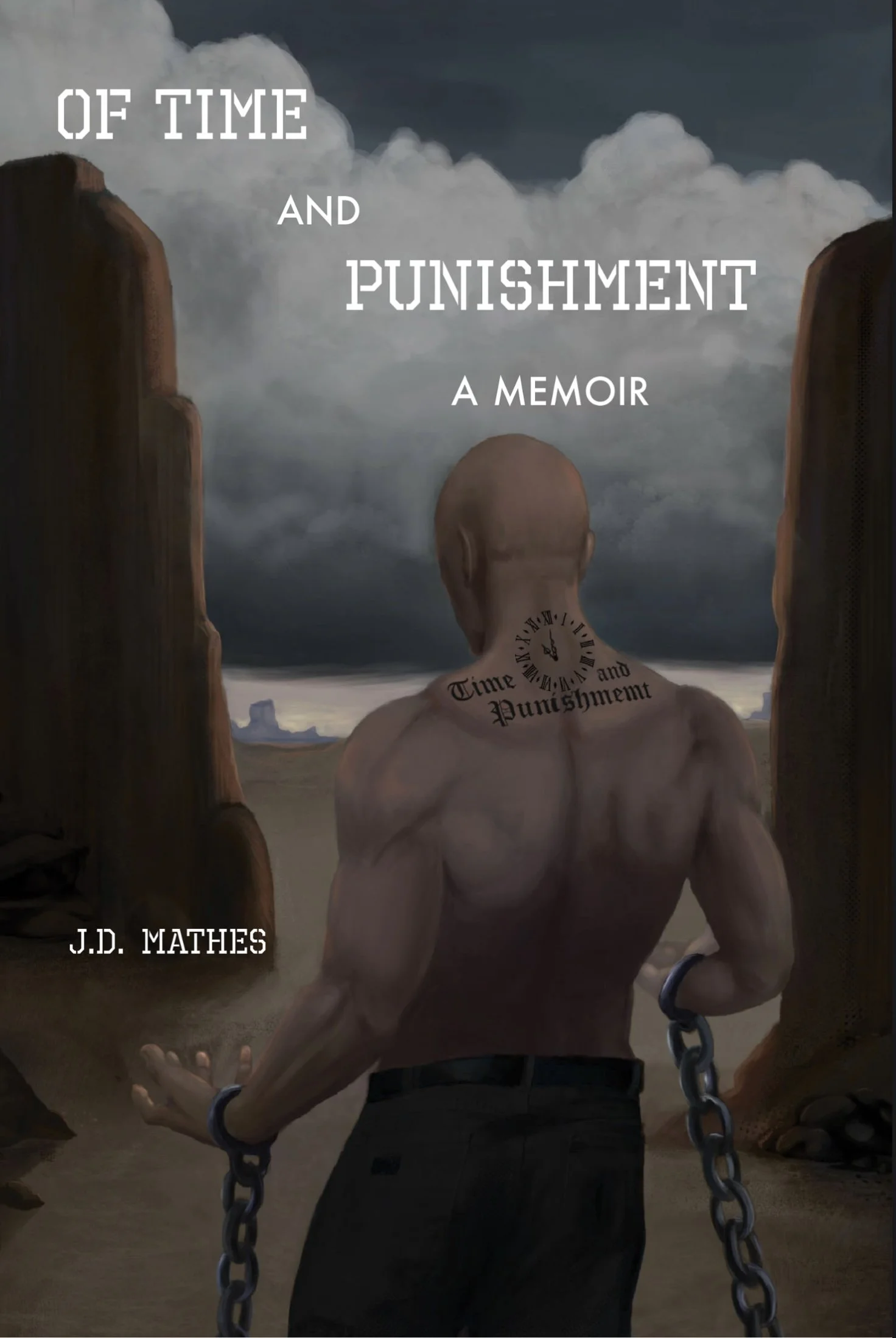
The first entry of the series,
was of course the book cover.
About the Book
Of Time and Punishment centers on the period between J.D. Mathes’s release from federal prison and his eventual release from the purgatory of a halfway house in Las Vegas, Nevada, in 1985. Once an honorable, decorated soldier in the Army National Guard, Mathes became a federal inmate following his involvement in covering up the theft of a machine gun by a friend.
At its core, the book traces the interior life of a young man attempting to rebuild himself after incarceration. As he searches for work and companionship, Mathes navigates the persistent stigma of being a felon, a fractured sense of identity, and the unresolved weight of his past. Set against the backdrop of Las Vegas, the narrative also confronts the quiet, constant lure of alcohol — a temptation he is forbidden to indulge, yet never fully escapes.
Rather than offering easy redemption, Of Time and Punishment dwells in uncertainty, restraint, and consequence, examining how time stretches, repeats, and presses upon those living in its margins.
About the Author
J.D. Mathes is a PEN America Writing for Justice Fellow and an award-winning author whose work spans memoir, essays, poetry, and screenwriting. He has worked as a screenwriter with Rehabilitation Through the Arts and is a four-time recipient of the Norman Levan Grant.
Mathes contributed a chapter to The Sentences That Create Us: Crafting a Writer’s Life in Prison for PEN America and regularly teaches writing workshops for formerly incarcerated men and women and their families. He also lectures on free speech and prisoners’ rights through PEN America.
His published works include Ahead of the Flaming Front: A Life on Fire, winner of the North American Book Prize; Fever and Guts: A Symphony; The Journal West: Poems; and Of Time and Punishment: A Memoir.
These works were not created to explain a story, but to sit beside it; to occupy the same atmosphere and ask similar questions. They exist in the margins, where interpretation remains open and meaning continues to shift with time.
Thank you for taking the time to read and engage with this work. Your attention, curiosity, and support make space for these pieces to exist beyond the studio.